Ten Minutes of Math at Home That Isn't a Worksheet
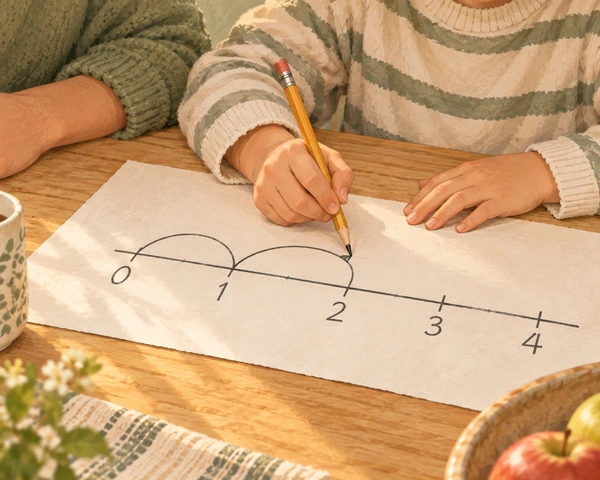
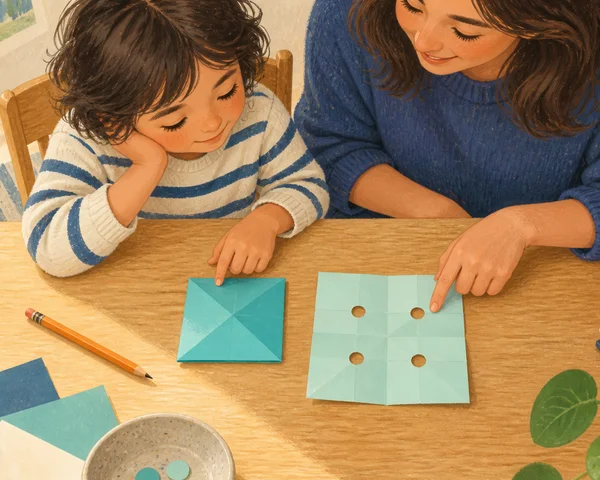
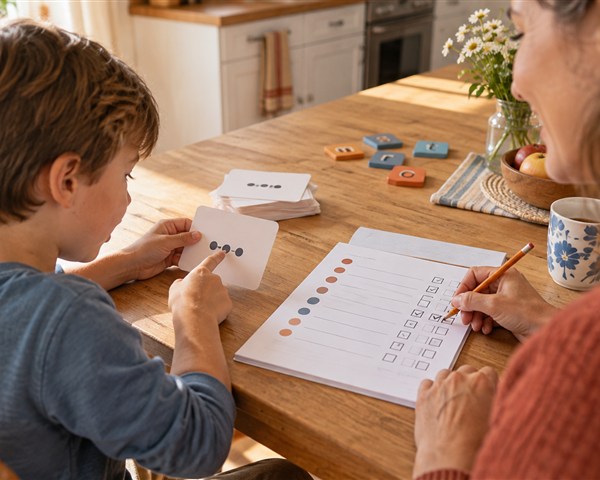
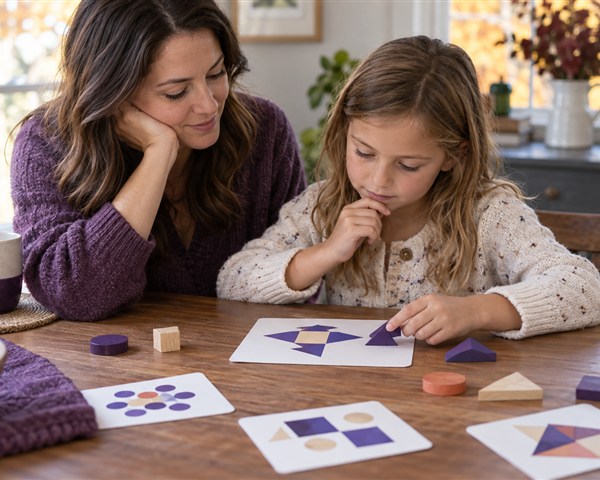
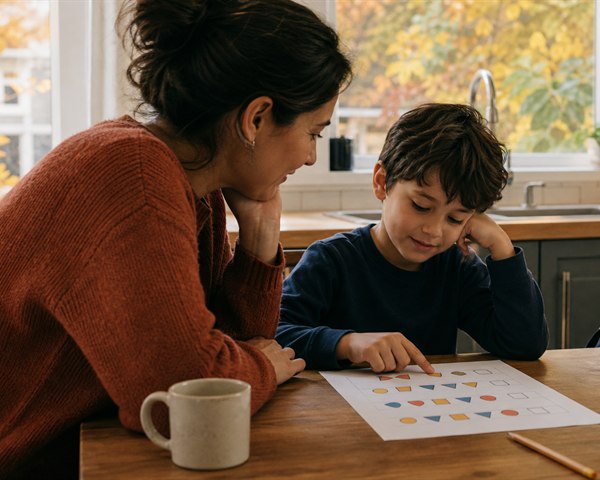
Ten minutes is enough if it is spent on the right thing. The four ideas early arithmetic rests on, and what to do about each one at the kitchen table.
Read articleThe GrowMindGrow learning journal
Thoughtful guidance, hands-on activities, and useful resources for the parents and educators helping children thrive.
Explore the latest article
Featured article
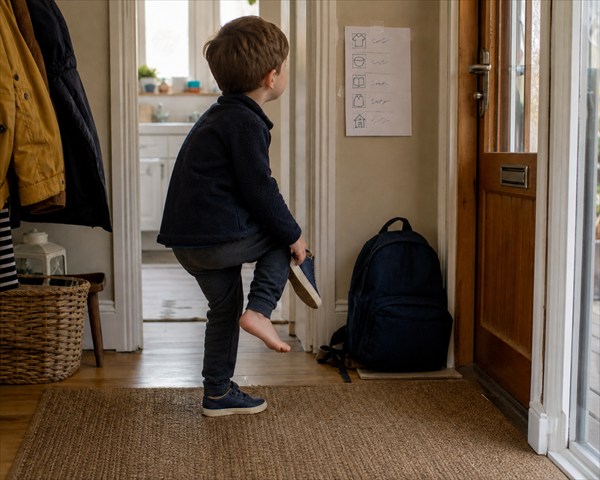
Most morning routines work for three weeks. The reason they fail is structural, and fixing it takes one evening and a piece of paper by the door.
Read the featured articleExplore the journal
Activities and guides you can put to use at home or in the classroom.

Ten minutes is enough if it is spent on the right thing. The four ideas early arithmetic rests on, and what to do about each one at the kitchen table.
Read article
A conference is ten or fifteen minutes. The parents who get answers are the ones who walked in knowing what they wanted to ask, and who wrote down what was said.
Read article
Create a private fiction or nonfiction report organizer that adapts from oral retelling and drawing to summary, analysis, evidence, and evaluation.
Read article
Turn tonight’s assignments into a realistic sequence of focused work, short breaks, and buffer time without turning homework into a race.
Read article
Choose a grade band, operation, and friendly context to create private, printable word problems with checked arithmetic and explainable solutions.
Read article
Choose grade-aware questions for before, during, and after reading, then use them to follow a child’s thinking without turning a book into a quiz.
Read article
Create thousands of child-friendly story ideas by grade and genre with a free, private generator that leaves the storytelling to the writer.
Read article
How schools can choose remote-learning, classroom, and AI tools that solve real instructional problems without sacrificing access, privacy, or relationships.
Read article
Twelve age-flexible activities that help children build emotional vocabulary, notice body cues, listen, empathize, solve problems, and reflect.
Read article
Browse 300 grade-by-grade writing prompts, download printable K–5 PDFs, and learn how to adapt each idea for emerging and confident writers.
Read articleExplore the journal
Ideas for supporting children as they build skills, confidence, and curiosity.

Conferences arrive at week eight. A child who has been dreading the mornings since September has had two months of it by then — this asks in week three instead.
Read article
A teacher meets twenty-five names and a stack of files. The family already knows what helps, what is hard, and what the child is proud of — this asks for it in week one.
Read article
Move beyond slogans and effort praise with a private challenge planner that connects difficulty to strategies, support, and reflection.
Read article
Build a focused list of parent-teacher conference questions about learning, classroom life, wellbeing, and practical next steps.
Read article
Fifteen realistic ways families can support learning through connection, routines, reading, play, independence, healthy habits, and partnership with school.
Read article
An age-aware overview of common development from 6 to 12, how families can help, and when a concern is worth discussing with a professional.
Read article
Five practical ways to use children’s questions, interests, choices, play, and reflection to make reading and writing more meaningful.
Read article
Ten practical ingredients for a safe, inclusive elementary classroom built on relationships, clear routines, student voice, active learning, and family partnership.
Read articleExplore the journal
A considered look at how digital tools shape learning and family life.

Use eight practical questions to compare children’s educational apps and games without trusting labels, stars, or engagement alone.
Read article
Create a private, printable family media plan that protects sleep, learning, play, and connection without treating every screen activity as equal.
Read article
A practical, age-aware approach to children’s screen use that looks beyond the clock to content, context, healthy routines, and family communication.
Read articleExplore the journal
A considered look at how digital tools shape learning and family life.

Most kindergarten readiness lists are academic. The first six weeks are not — they are about a child who can manage a day. Here is what to practise, and what to leave alone.
Read article
Prepare a private, printable plan that helps adults and children name a feeling, practice one calming support, reconnect, and reason later.
Read articleMore ways to help children grow
Learn how GrowMindGrow connects adaptive practice with clearer progress insights for families and schools.