Want just the tool? Before We Meet has its own page — easier to bookmark and to pass on.
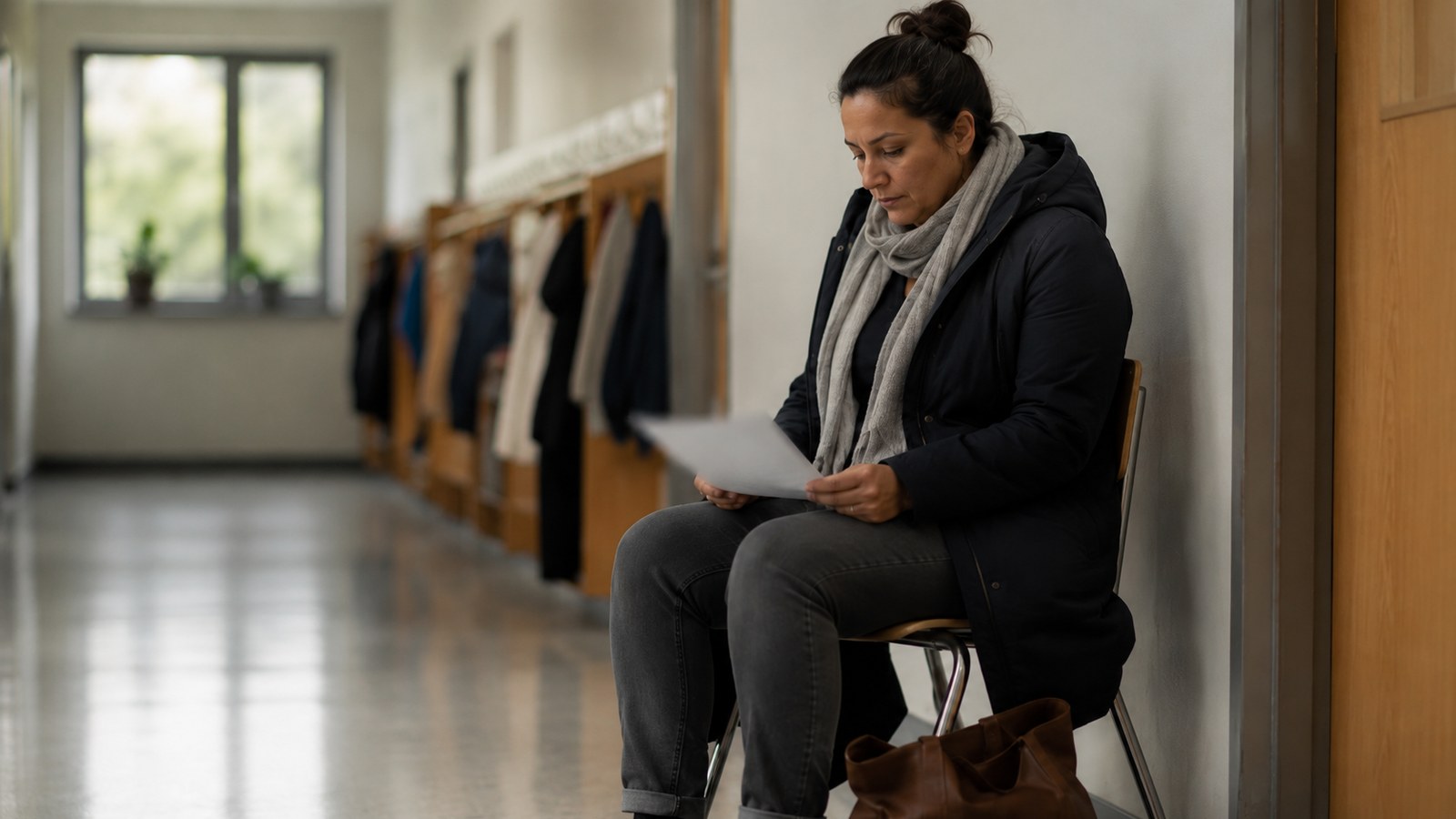
A parent–teacher conference is usually ten or fifteen minutes, and it does not feel like a meeting with an agenda. It feels like a conversation in a small chair, slightly rushed, with someone waiting outside.
Most parents come out of it having heard that things are broadly fine, having nodded at two or three specifics, and having asked none of the things they meant to ask. A week later they cannot reconstruct what was agreed, or whether anything was.
Before We Meet is one page. You fill in the top half the night before and the bottom half while you are in the room.
Why the questions leave your head
This is not a failure of preparation. It is what short meetings do.
The teacher opens with their summary, because that is the sensible way to begin, and the summary sets the agenda. If it is largely positive — as most are — the questions you arrived with start to feel like problems you would be introducing. If it contains something unexpected, that one thing occupies the rest of the time.
Either way the conversation follows the teacher’s structure. That is not a criticism of teachers; they are running several of these in an evening and a structure is how anyone survives that. But it means the parent who gets answers is the one holding a piece of paper.
The top half: three questions, written down
The sheet asks for the three things you most want to ask, numbered.
Three, not ten. A list of ten is a wish, and it will not survive contact with a fifteen-minute slot. Three will fit, and forcing yourself down to three does most of the useful thinking — it makes you decide what actually matters rather than collecting everything that has crossed your mind since September.
If you only have one real question, write one. The lines are a prompt to think beforehand, not a quota. One question you genuinely care about beats three you invented in the corridor.
Then two prompts that make those questions land better:
What I’ve noticed at home. Two or three observations, not a case. A change in sleep or mood, where homework stalls, what your child says about a particular subject, something they have been proud of. Teachers can act on specifics; they cannot do much with he seems unhappy.
What I’d like to understand better. The one that gets past how is she doing. It might be how reading groups are chosen, what a score on a report actually measures, why a particular subject has changed, or what the class is like at a moment your child keeps mentioning. Naming what you do not understand is far more productive than asking for a general update.
Our fuller guide to conference questions has a much longer list to draw from if you are not sure what to put in the three lines.
The bottom half is for during
Most conference advice stops at preparation. The part people actually lose is what was said.
The lower half of the sheet is a large panel for notes from the meeting, and then a single row: what we agreed, and who’s doing it.
That row is the most useful thing on the page. Conferences generate a lot of agreement in principle — we’ll keep an eye on it, it would help if he read more at home, I’ll check with the reading specialist — and almost none of it is written down by anyone. Six weeks later nobody can remember whether the specialist was going to be contacted, or by whom.
Writing it in front of the teacher also clarifies it. So — you’ll speak to the reading specialist, and I’ll do fifteen minutes a night? is a sentence that either gets confirmed or gets corrected, and both outcomes are worth having.
It is yours, not the school’s
This is the difference between this sheet and the other two forms we publish. Get to Know My Child and the First Weeks Check-In are written to be handed to a teacher. This one is not.
Nothing on it goes into a file. You do not give it to anyone. It can contain the question you are slightly embarrassed to ask, the observation you are not sure is fair, and the thing your child said that you have not decided what to do with.
That matters, because a preparation sheet that might be read by the school is a preparation sheet people write carefully. This one should be scruffy.
Bring your child into the preparation
The meeting is about them, so their view belongs in it even when they will not be in the room. At a calm moment, a few days before:
- What is going well at school right now?
- What is confusing, boring, hard or worrying?
- Is there anything you wish your teacher knew?
- Is there anything you want me to ask?
Do not promise an outcome before you have heard the teacher. Say you will listen, ask, and bring back what they need to know. If a child raises something about safety or an adult at school, that goes through the school’s reporting process rather than waiting for a routine conference.
For teachers: send it home a week before
This one works better distributed than discovered.
A parent who arrives prepared makes a fifteen-minute slot go further for both of you. You spend less of it establishing what the parent wants to know, fewer conversations end with a vague agreement nobody records, and the follow-up emails that would otherwise arrive over the next fortnight mostly do not.
It also changes who prepares. Without a prompt, the parents who arrive with written questions are the ones who were always going to — and they are not a random sample of your class. Sending the sheet to everyone narrows that gap at almost no cost.
After the meeting
Read your own notes the same evening, while you can still remember what the shorthand meant. Fill in anything you did not have time to write down.
Then put a date on the agreement. If something was going to happen, decide when you will check whether it did — three or four weeks is usually right. A conference that produces one specific, dated, followed-up change is worth more than one that produces a page of reassurance.
The form
Before We Meet is a free one-page PDF. It prints in black and white on US Letter and is made to be written on with a pen — the night before, and again during the meeting. No account, no email address, nothing to install.
Teachers: print a class set and send it home a week ahead. There is nothing to buy and nothing to attribute.
Sources and further reading
- Henderson, A. T. & Mapp, K. L., A New Wave of Evidence: The Impact of School, Family, and Community Connections on Student Achievement.
- Harvard Family Research Project, on parent–teacher conferences as two-way conversations rather than reports.
- US Department of Education, Family and Community Engagement framework — on shared, specific next steps.