Free editable PDF builder
Make the after-school checklist fit your child
Change the title, add a name, rewrite the responsibilities, and put them in the order they happen. The finished one-page PDF is created privately in this browser.
Ready to download
My After-School Checklist
Add a name, or leave the name line blank- Hang up my backpack and coat
- Empty my lunchbox
- Put school papers in their place
- Have a snack and drink water
- Take a movement or quiet break
- Finish homework or reading
- Do one household responsibility
- Pack what I need for tomorrow
Nothing entered here is saved or sent. The PDF is made on this device and sized for US Letter paper.
Want just the tool? After-School Checklist has its own page — easier to bookmark and to pass on.
The after-school rush contains several different jobs disguised as one instruction: “Get yourself sorted.” A backpack needs emptying. A notice needs handing over. The child may need food, water, movement, quiet, help with homework, or time before they can talk. Tomorrow’s belongings somehow need to find their way back to the door.
A useful after-school checklist takes those hidden handoffs out of an adult’s running commentary and puts them in a visible order. It does not make a child instantly independent. It gives independence something concrete to grow around.
What belongs in an after-school routine?
Begin with what actually needs to happen between arriving home and the next dependable anchor, such as dinner, an activity, or bedtime. Most family routines draw from five groups:
- Arrival: shoes, coat, backpack, keys, or travel card go to their places.
- School handoff: lunchbox, water bottle, homework folder, forms, and messages reach the right adult or location.
- Recovery: food, water, connection, quiet, outdoor play, or movement gives the child a transition out of the school day.
- Responsibilities: homework, reading, practice, pet care, table-setting, or another household contribution happens at an agreed time.
- Closing the loop: completed work, signed forms, equipment, and tomorrow’s essentials return to the backpack or launch area.
Not every family needs every group on one chart. The checklist should carry the steps that are repeatedly forgotten or repeatedly narrated—not every ordinary action a child takes between 3 p.m. and bed.
Routine, responsibility chart, or reward chart?
These tools answer different questions.
- An after-school routine answers: What happens next?
- A responsibility checklist answers: Which parts can I take care of?
- A reward chart answers: What will I earn when something is completed?
One page can serve the first two purposes without becoming the third. A child can tick “put my lunchbox by the sink” because the box has a reliable destination, not because every basic contribution requires a prize.
Rewards may be appropriate for some families and goals, but they are not required for the checklist to work. Attention, specific acknowledgment, and the experience of being capable can carry a great deal: “You checked the list and packed the library book without a reminder.”
Decide what happens immediately after arrival
There is no universally correct time for homework. The American Academy of Pediatrics’ guidance on developing homework habits notes that some children work well shortly after school while others do better after time to unwind and play. The useful question is not whether snack or homework comes first in somebody else’s house. It is what order helps this child move through the afternoon reliably.
Watch the first 20 minutes for several days:
- Is the child hungry enough that everything else becomes an argument?
- Do they seek movement after sitting and concentrating?
- Does quiet help, or make the transition harder?
- Is there a time-sensitive handoff, such as refrigeration, medication, or a form an adult must see?
- When can an adult realistically help if homework requires it?
Put genuine constraints first. Then choose a recovery step rather than assuming a child should move directly from a full school day into more seated work.
Keep the first checklist shorter than the final routine
The finished afternoon may contain 12 actions. The first independent checklist should probably not.
Start with four to six steps that form one visible chain. For example:
- Hang up backpack and coat.
- Put lunchbox by the sink.
- Place school papers in the tray.
- Have a snack and water.
- Take a 20-minute movement or quiet break.
- Check the homework plan.
When the child can use that sequence with less adult prompting, add the next responsibility. The American Academy of Pediatrics’ age-appropriate chores guidance similarly recommends introducing one new task at a time for a school-age child who is new to household responsibilities.
A long chart can document everything an adult wishes would happen while helping the child remember nothing. The test is whether the page reduces spoken reminders.
Write actions a child can finish
“Be responsible” cannot be checked honestly. Neither can “get organized.” Replace broad outcomes with visible actions:
| Too broad | Clear enough to complete |
|---|---|
| Sort out school stuff | Put papers in the blue tray |
| Clean up | Put shoes on the rack and coat on the hook |
| Do homework | Open the planner and begin the first task |
| Help around the house | Fill the pet’s water bowl |
| Get ready for tomorrow | Put homework folder and library book in backpack |
Use the words your family already uses for places and objects. If everyone calls it “the launch pad,” write that. The checklist is a cue for the child, not copy for a visitor.
Sample routines by stage
Age labels are only starting points. Reading ability, executive-function skills, disability, school demands, transportation, and experience all affect how much support a child needs.
Kindergarten and grade 1
- Backpack on the hook
- Lunchbox by the sink
- Papers in the family tray
- Snack and water
- Play or move
- Put one item in tomorrow’s backpack with an adult
Use short labels and read the sequence together at first. A child who cannot yet read the words can learn the row order, colors, and simple symbols. Keep adult supervision appropriate to the child’s age and circumstances.
Grades 2–3
- Empty lunchbox and water bottle
- Hand over school notices
- Snack and reset
- Check homework folder
- Complete the agreed homework or reading block
- Do one household responsibility
- Repack finished work
At this stage, the checklist can begin replacing reminders. Stay available, but pause before narrating the next step. Let the page do its job.
Grades 4–5
- Put school items away
- Check the calendar and assignments
- Choose the order of homework, activity, and recovery time
- Complete one household contribution
- Charge the school device in its agreed location
- Pack tomorrow’s materials and equipment
Older elementary children can help decide the order and wording. Choice within real limits makes the routine theirs without asking them to invent the family’s whole afternoon system.
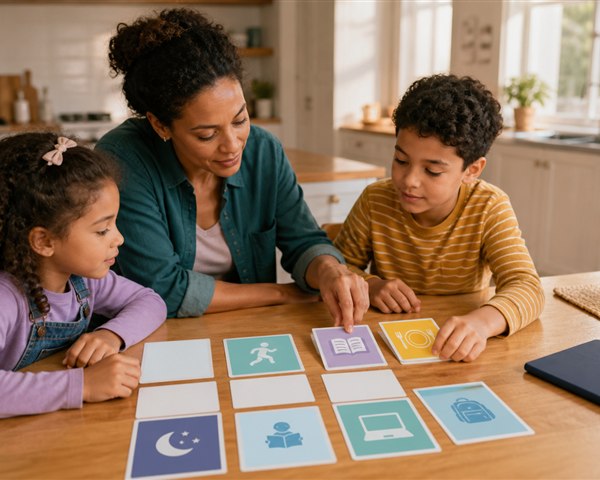
Build the checklist with your child
Make the first draft during a calm moment, not while pointing at a backpack on the floor.
Ask:
- What is the first thing you need when you get home?
- Which thing do I remind you about most often?
- Where should papers and lunch items go?
- Which responsibility feels easy enough to own now?
- How will we know the checklist is finished?
Adults still set safety, time, and household requirements. The child can help choose the sequence, wording, and one or two responsibilities. Harvard’s Center on the Developing Child notes that when adults and children plan and carry out consistent routines together, children get practice planning, acting, reflecting, and resisting distractions. Harvard’s executive-functioning toolkit also emphasizes that predictable routines help children know what comes next.
The editable builder above lets you rename, reorder, add, and remove every row. The PDF is created on your device; nothing typed into the form is saved or sent.
Put the checklist where the routine happens
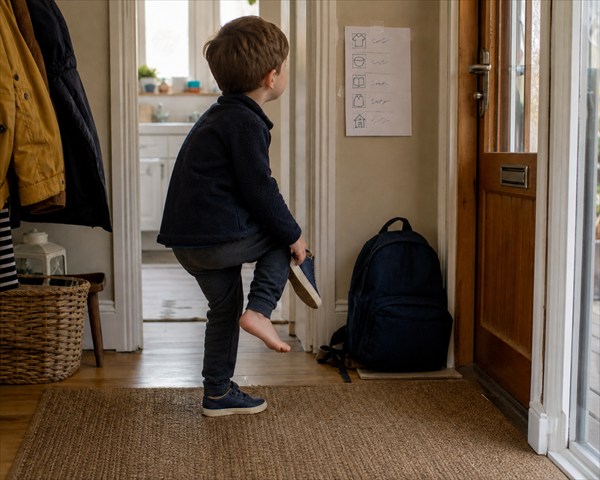
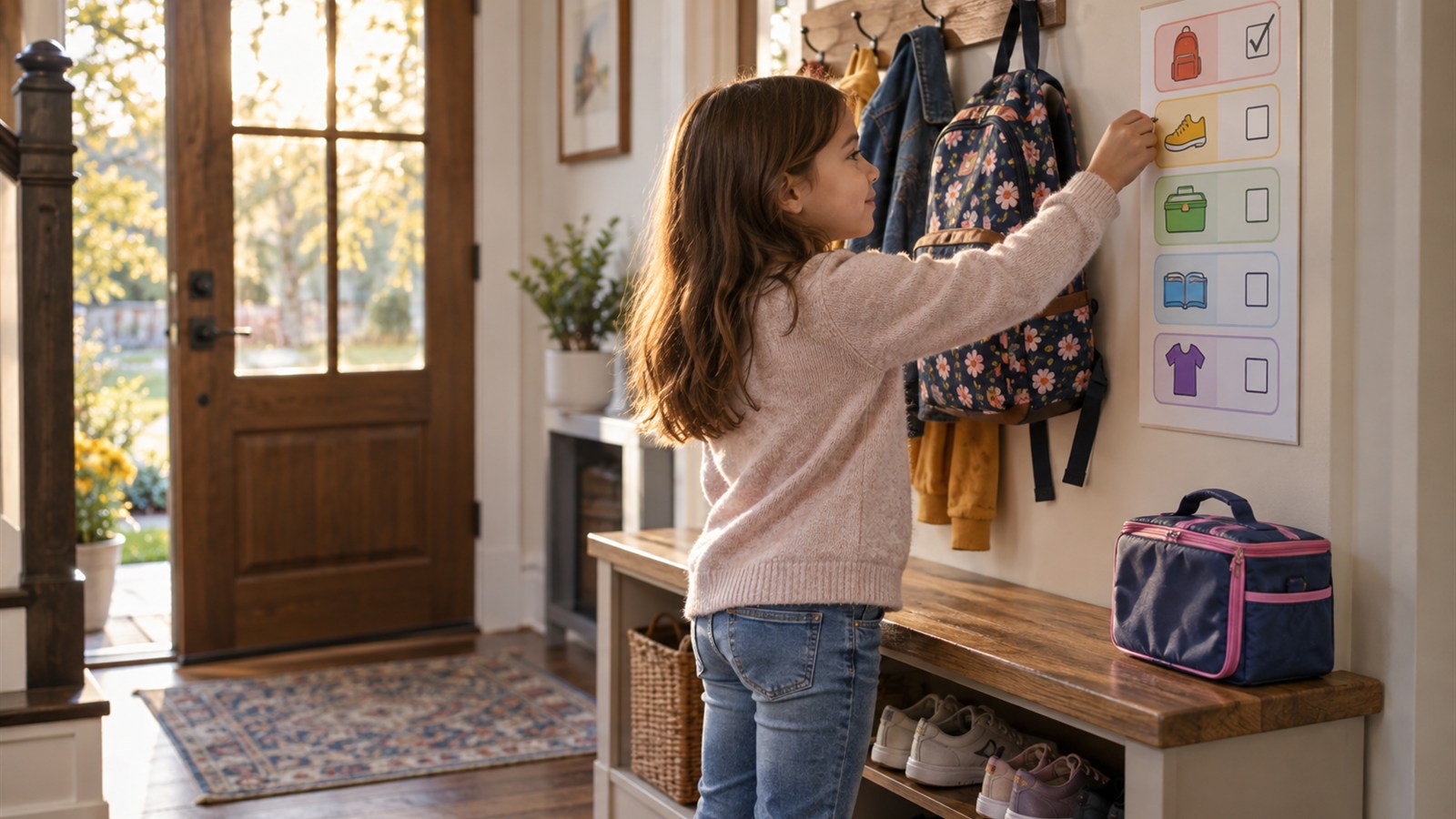
A page on the refrigerator cannot cue a backpack step that happens in the entryway if the child never sees it until snack. Put the checklist at the first place the sequence begins: beside the coat hooks, inside a cupboard door near the school-paper tray, or on the desk where the backpack is opened.
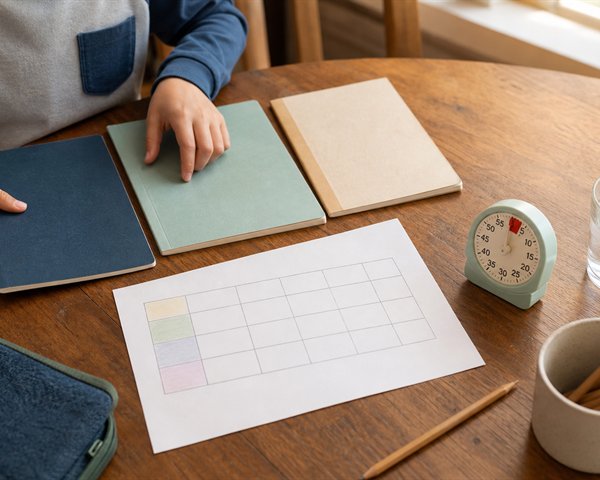
Print a plain paper copy for the first week. Change anything that repeatedly causes confusion. Once the order survives real afternoons, laminate it or place it in a reusable sleeve and use a dry-erase marker.
If different days have genuinely different routines, avoid squeezing them into tiny exceptions. Make one “home afternoon” checklist and one shorter “activity day” checklist. Two clear pages are easier than one page full of if-statements.
Hand over one responsibility at a time
Independence grows through a gradual change in who holds the next step:
- Adult demonstrates: “The school form goes in this tray.”
- Adult and child do it together.
- Adult points to the checklist instead of giving the answer.
- Child checks and completes the step.
- Adult notices the finished chain later.
If the child still needs help, make the support more specific. Move the tray into sight. Split “empty backpack” into papers and lunchbox. Put the checklist lower. Remove a step that belongs to the adult. A failed cue is design information, not proof that the child does not care.
For the homework portion, the free printable homework planner can turn assignments into focused work blocks and breaks. Keep that detailed plan at the desk; the after-school checklist only needs one row pointing toward it.
When the checklist is ignored
Before adding consequences, find the failure point.
The child never looks at it
Move it into the child’s path and use one neutral prompt: “Check the list.” If an adult continues reciting every item, looking at the page never becomes necessary.
A row is always skipped
Check whether the wording is concrete, the materials have a home, and the child has been taught the task. “Clean lunchbox” may require several decisions; “put lunchbox beside the sink” is one.
The routine works only on easy days
Create a minimum version for late buses, difficult days, and activities. It might contain only time-sensitive handoffs, food, one school check, and tomorrow’s essentials.
The chart has become another argument
Stop and revise it together. Remove unnecessary rows. Move recovery earlier. Decide which step truly matters today. CDC guidance on using routines and rules stresses simplicity, predictability, and explaining changes while everyone is calm.
The child needs more support than a checklist provides
A visual sequence cannot solve unclear homework, an inaccessible task, severe fatigue, persistent distress, or an unmet learning need. Contact the teacher or an appropriate professional when the problem is larger than remembering the order.
Close the loop before the evening ends
An after-school routine earns its keep the next morning. Include a final step that returns finished work, forms, instruments, library books, and activity equipment to a known launch place.
That step connects naturally to a school morning routine your family can use together. Make the next part of the day visible with the free morning routine picture chart, keeping evening preparation on the after-school list where it belongs.
If screens are part of the recovery or evening plan, agree on their place separately rather than making the checklist carry every media rule. The free family media plan builder gives those agreements enough room to be clear.
Download the editable after-school checklist
Use the free editable after-school checklist builder to:
- add a child’s name or leave a blank name line;
- change the title;
- rewrite every responsibility;
- add, remove, and reorder up to 12 steps; and
- download a one-page US Letter PDF without creating an account.
Build the version that matches Tuesday in your house, not an imaginary perfect afternoon. A useful checklist is a small external memory: quiet, visible, and ready to hand one more part of the day to the child.