Want just the tool? Morning Routine Chart has its own page — easier to bookmark and to pass on.
Shoes are missing. Someone still needs breakfast. The bag is ready, but nobody remembers where it went. A morning routine chart gives the family one place to look for the next step.
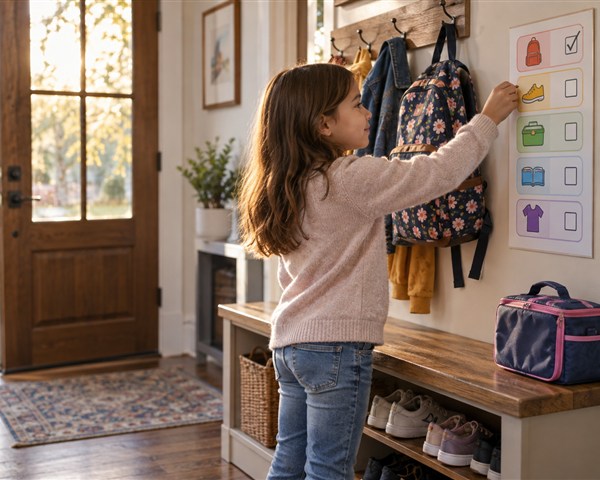
Start with our free morning routine chart for kids. It comes with six pictured steps. Change the words, pictures and order, add a name if you like, then print your version. You can also download the ready-made picture chart without editing anything.
A chart is a shared reminder. It does not mean a child has to get ready alone, and it does not make a rushed morning a test to pass.
Start with the morning you actually have
Before making the chart, walk through an ordinary school morning together. What happens at home? What happens at school or with another caregiver? Which steps need adult help?
Head Start describes routines as the steps within everyday activities and emphasizes that families can have different routines. There is no single required number or kind. That is a useful starting point when choosing what belongs on your own chart. Read Head Start’s guidance on routines at home.
Our starter chart uses this example:
- Get dressed.
- Eat breakfast.
- Brush my teeth.
- Check my bag.
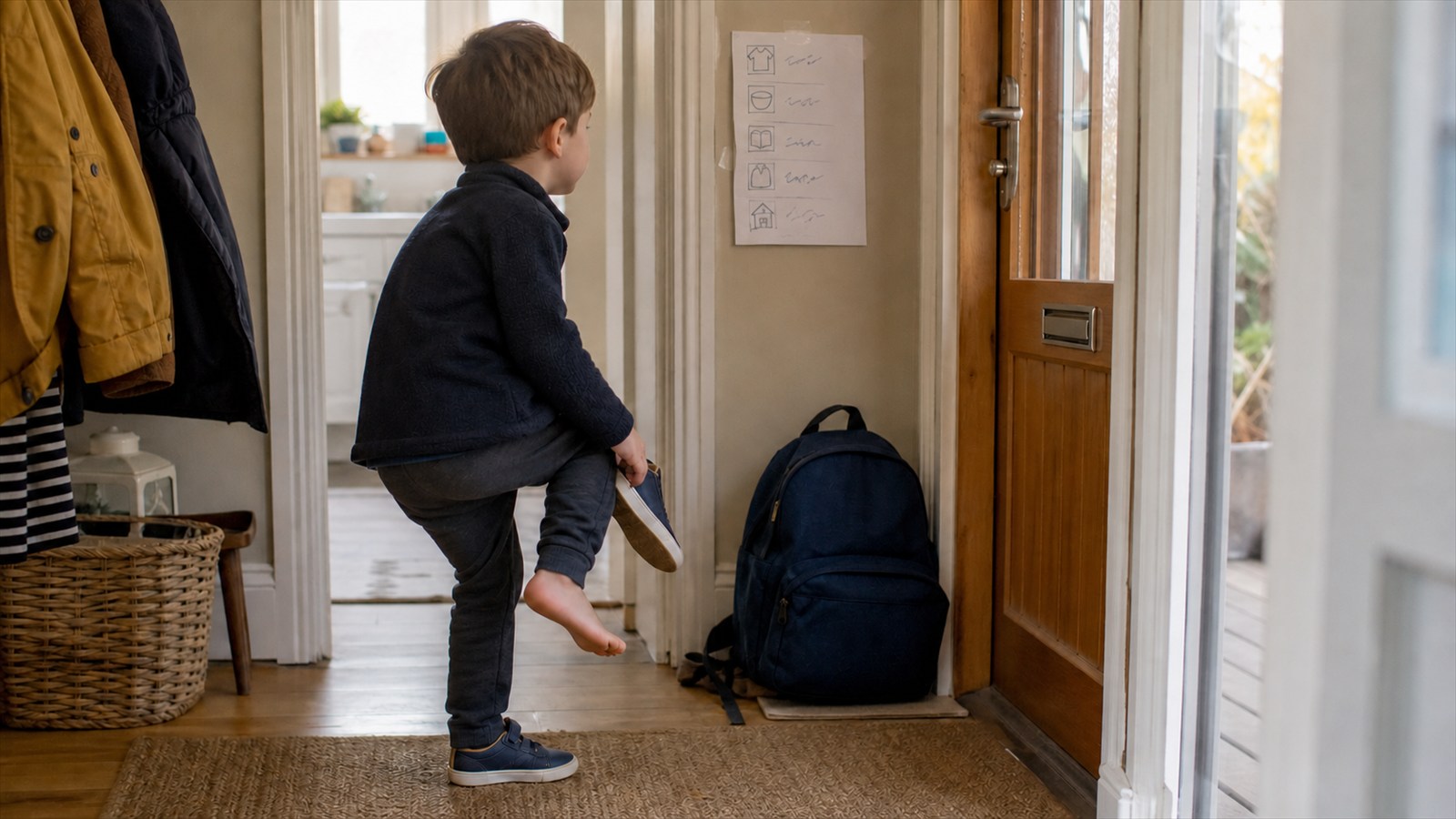
- Put on my shoes.
- Get ready to go together.
Change that order to match your household. If breakfast happens at school, replace that card. If getting dressed needs several separate reminders, split it into smaller steps. If three pictures cover the part of the morning you want to practice, use three.
Pair familiar words with pictures
Use the words your child hears at home: “Find my blue bag” may be clearer than “Prepare belongings.” Ask what they think each picture means before relying on it as a reminder.
Head Start’s visual-support guidance explains how pictures can help children understand what happens next and the parts of a routine. Its resources focus on young children; our chart is a practical family tool, not a tested intervention or a guarantee of independence. Read about visual supports.
In the builder, each step has a choice of ten simple pictures. You can change its words and move it up or down without losing the other steps. The eight-space limit is the size of this printable tool, not a recommendation about how many steps your child should need.
For a child who does not recognize a symbol, explain it together or draw a more familiar picture on the printed page. Older children can help choose brief reminders in their own words.
Try the chart when you have time to explain it
Look at the chart together before the first busy morning. Point to the first picture, say what it means and show where that step happens. Place the chart where your family can see and reach it.
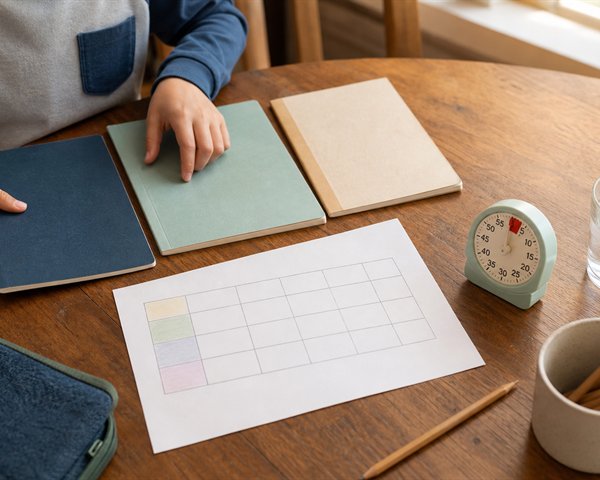
The next morning, try “Let’s look at what comes next.” Help with the task as needed. You can leave the small boxes blank, use pencil check marks, or keep the sheet in a reusable sleeve. There is no score to earn.
Give the evening a small job
Choose something that is practical to prepare ahead: finding a library book, choosing clothes or putting a signed form in the bag. Keep that job in the evening plan so the morning chart stays useful.
The editable after-school checklist can hold those earlier jobs. Use separate plans if that makes the two parts of the day easier to follow.
Adjust one thing after a difficult morning
At a quieter time, ask which step was unclear, hard to do or in the wrong place. A missing shoe might call for a consistent shoe spot. An unclear picture might need different words. A task that requires help can say “Ask a grown-up to help.”
Keep the parts that work. Change a step, move it or remove it. If the problem is about school itself, a chart may not address it; make room for a conversation. Our first-weeks check-in offers prompts to get that conversation started.
Print the version you want to try
Open the morning routine chart builder, make your edits and choose Print my chart / save PDF. Your browser lets you select a printer or save a PDF. An ink-friendly option removes the colored card backgrounds.
Edits stay in the open page and are not saved after you leave. Print or copy your steps before closing it. The separate ready-made download always contains the original six-step example, so choose the print button when you want your customized version.