Want just the tool? CVC Blending Game has its own page — easier to bookmark and to pass on.
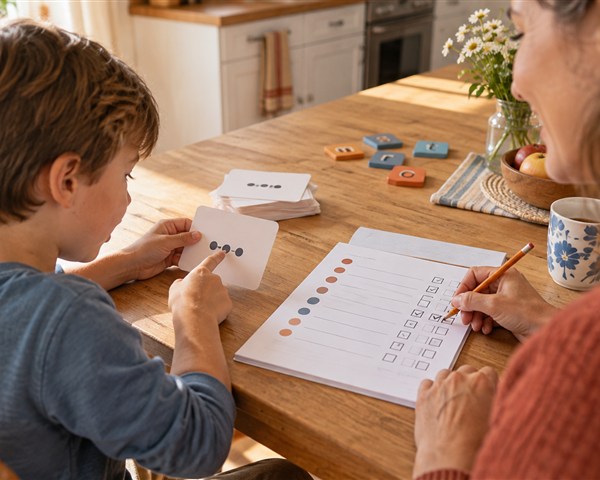
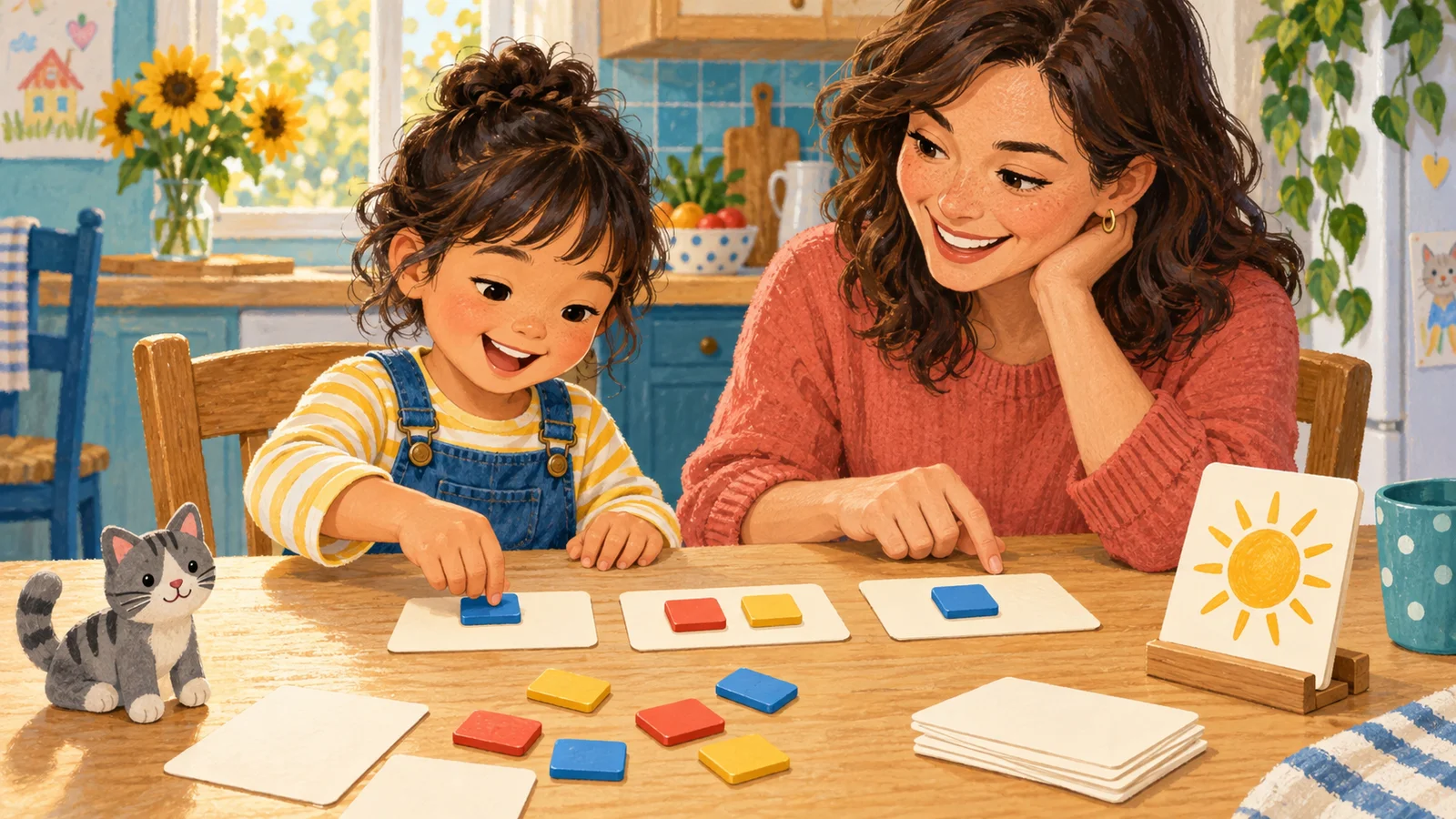
CVC blending games give children practice joining familiar letter sounds into a whole word. Start with a few words such as mat, sit, or sun, model how the sounds join, and let the game provide a reason to read another one. The aim is accurate reading with meaning, not finishing a stack of cards quickly.
Play the free CVC word garden — practise six short-vowel words with a grown-up, slide the sounds together, and revisit words you choose. The activity keeps track of words explored, without recording or scoring your child’s reading. Use the paper games below when you want to move away from the screen.
Download the free CVC blending games pack (PDF, 8 pages) — seven game instructions, 60 word cards grouped by short vowel, cut-apart letter tiles, three sound boxes, a reusable read-and-cover board, and five word-family chain strips. Print only the pages you need. No account or email is required.
Choose one game for roughly five minutes and stop earlier if the child is tired. These activities can also suit a first grader revisiting short vowels. Readiness matters more than the grade printed on a resource.
What are CVC words, and when is a child ready?
CVC stands for consonant–vowel–consonant. This pack uses straightforward three-letter words with three sounds and a short vowel in the middle: m–a–t, s–i–t, s–u–n. It leaves out consonant blends, digraphs, silent-e patterns, and words such as box, whose final letter represents two sounds.
Before using a card, check that the child knows the sounds its letters represent. A child who is still learning /m/ needs instruction and modeling, not a longer game of guessing mat. Explain an unfamiliar word’s meaning too; successful blending should lead to a word the child understands.
The Institute of Education Sciences’ foundational reading guide recommends explicitly teaching children to blend letter sounds from left to right. Its family reading activities also encourage adults to start with simpler tasks and adjust when an activity causes frustration.
The games below are original ways to practice that work. They support instruction rather than replacing a phonics sequence or a teacher’s assessment.
Choose a small set of words
Each printable vowel page has 12 cards. Begin with three to six that fit sounds already taught, then mix in unfamiliar words using those same patterns. There is no benefit in using all 60 at once.
| Short vowel | Words in the printable pack |
|---|---|
| a | map, mat, sat, sad, fan, pan, man, ran, cat, cap, tap, bag |
| e | bed, red, fed, led, hen, pen, ten, men, net, pet, wet, leg |
| i | sit, sip, dip, lip, pin, fin, win, bin, pig, dig, big, lid |
| o | hot, pot, dot, not, top, mop, hop, pop, log, dog, fog, rod |
| u | sun, fun, run, bun, cup, pup, cut, hut, mud, bud, bug, rug |
Pronunciation varies across dialects, particularly in some short-o words. Use the child’s ordinary pronunciation and choose examples that make the intended contrast clear. A language or accent difference is not automatically a reading error.
The cards do not use pictures or vowel-specific colors on their fronts. Adults can select the vowel page; children still need to look through the letters to read the word.
1. Slide and blend
Use: Three to six word cards and a finger or counter.
Place one card on the table. Touch each letter as you say its sound, then slide a finger underneath while joining the sounds into a recognizable word. Invite the child to do it with you, then try the card independently.
Start with a word such as mat. You can hold /m/ smoothly before moving into the vowel. Keep /t/ short; avoid adding an extra “uh” that turns three sounds into several syllables. Continuous sounds can stretch, but stop sounds such as /p/ cannot be sustained in the same way.
After reading, ask for meaning: “Can you point to a mat?” or “Where might we put one?” A quick conversation makes the word more than a sound exercise.
Make it easier: Model the whole blend first. Move on: Offer another word using known sounds instead of repeatedly rehearsing the same card.
2. Change one sound
Use: Letter tiles, the three sound boxes, and the chain strips on page 8 of the pack.
Build cap. Read it. Then say a new word, tap, and ask the child which tile to change. Read the new word together and name the sound that changed: the beginning, the middle, or the end. Only one letter changes each time, which shows how each letter contributes to both the sound and the spelling of a word.
Word-family chains
Start with a chain that keeps its short vowel. Words in the same family share an ending, so only the first sound changes. Partway along, the last sound changes once and the chain moves into a second family:
| Short vowel | Word families | Chain |
|---|---|---|
| Short a | ‑ap, then ‑an | cap → tap → map → man → fan → pan |
| Short e | ‑en, then ‑et | men → ten → pen → pet → wet → net |
| Short i | ‑ig, then ‑in | pig → dig → big → bin → pin → fin |
| Short o | ‑op, then ‑ot | top → mop → hop → hot → pot → not |
| Short u | ‑un, then ‑ug | bun → sun → fun → run → rug → bug |
Every word in these chains is one of the 60 cards, and no word needs the same letter twice, so one set of tiles builds them all. Play the chains on screen: you say each new word, and your child taps the letter that changed and chooses its replacement. The strips work two ways. To build, cover all but the first word; say the next word, let the child change a tile, then uncover it to check. To read, uncover one word at a time and let the child read it before saying which sound changed.
When the ending changes (map to man), pause on it. A child who has been changing only the first letter may reach for it again; noticing that the end of the word changed is part of the practice.
A chain that changes the vowel
When the family chains feel easy, try one where the middle vowel changes too:
mat → sat → sit → sip → lip → lid
Moving from sat to sit directs attention to the middle vowel; moving from sip to lip changes the beginning. Do not add an unfamiliar spelling pattern just to keep a chain going.
The same IES foundational reading guide describes this kind of word building: an adult models it first, children start with CVC words, and they add or replace one letter tile at a time. The chains here are our own examples of that format, not part of the guide.
Make it easier: Stay inside one family, or offer the two possible replacement tiles. Move on: Let the child propose a one-letter change, and discuss whether the result is a real word.
3. Read, hide, build
Use: Word cards, letter tiles, and the sound-box mat.
Read sun together, then hide the card. Say the word naturally. The child identifies its three sounds and places the corresponding letters in the boxes. Uncover the card and compare from left to right.
If the child builds sn, say the word together and listen for what comes between /s/ and /n/. The empty middle box is a prompt to listen, not a mark of failure. When the word is complete, read it again.
This activity connects reading and spelling. Keep the word short and the delay brief so the challenge remains mapping sounds to letters rather than remembering a long list.
4. Vowel detectives
Use: Six cards from two familiar short-vowel sets.
Mix mat, cat, pan with sit, pin, lip. Read each word before sorting it by its middle sound. Ask the child to say the sound they heard and point to the spelling that represents it.
Sorting letters visually is easier than reading. If the child places cards accurately without sounding or reading them, pause and read each one together. You want the connection between the sound, the letter, and the word.
Make it easier: Use two contrasting vowels. Move on: Add a third familiar vowel and vary the beginning and ending consonants.
5. Read and cover
Use: The blank six-space board, six chosen word cards, and large counters.
Write the six selected words on the board, one per space. Shuffle the matching cards. Draw one, read it, then cover the matching word. Keep going until the board is full.
Play cooperatively, or take turns with an adult. There is no need for a speed rule or a penalty for needing help. If a word stalls the game, model its sounds and blend together before placing the counter.
Change both the words and their positions for the next session. A child who remembers “the top-left word is cat” needs a fresh arrangement to show whether they are reading.
6. Find the changed word
Use: Four familiar-pattern word cards.
Place mat, cat, and cap face up. Read all three together. Ask the child to close their eyes while you replace cap with tap. Open eyes, read the row again, and identify the new word.
The important step is rereading, not winning a memory challenge. If remembering the old arrangement is difficult, leave the removed card beside the row so the child can compare its sounds and spelling directly.
Make it easier: Start with two visible cards. Move on: Choose replacements that differ in their middle vowel, such as sat and sit.
7. Word-to-message
Use: A few word cards and paper if the child wants to write or draw.
Draw a card, read it, and make a short spoken message using the word. For cat, the child might say, “The cat sat.” For cup, they might say, “My cup is red.” Draw the message, act it out, or write it together.
The adult can supply spellings and read untaught words in the sentence. These are oral-language extensions, not claims that every sentence is fully decodable with the pack’s letter patterns.
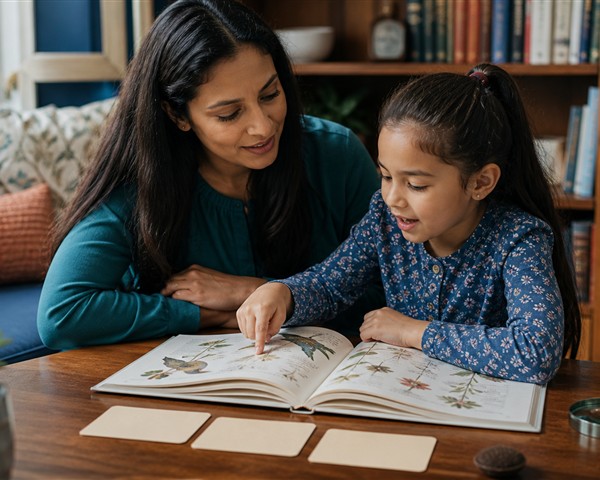
When the child is ready for connected reading, choose text that matches the phonics patterns they have learned. Your reading discussion cards can support conversation about books read independently or aloud by an adult.
If a child knows the sounds but cannot blend them
First listen to the sounds you are modeling. Extra vowel sounds after consonants can make mat sound like “muh-a-tuh,” which is harder to recognize. Demonstrate a smoother blend, then do it together.
Reduce the load: show one word, use known sound–spelling patterns, and keep the word’s meaning familiar. If the child names letters, acknowledge that letter names are useful for spelling, then model the sounds needed for reading this word.
When a child guesses from the first letter, return to all three letters. Pictures can enrich a story, but a picture on a practice card should not replace reading the printed word.
If difficulty continues across short, supported sessions, share specific examples with the teacher: which sounds are known, whether oral blending is easier, and what happens when print is added. Those observations are more useful than a home label or a timed score.
How these games fit with sight words and everyday reading
Decoding and efficient recognition work together. The Fry first 100 sight-word guide explains why sounding out a word successfully should remain visible alongside automatic recognition. Many high-frequency words contain regular spellings; others include a part that needs explicit teaching.
Use the CVC pack for a few minutes of focused practice, then return to reading, talking, and writing for a purpose. A card game does not need to carry the whole literacy session. For a child just starting school, our kindergarten guide can help place that practice inside a manageable routine.