Find something all three example boxes share. Then choose another picture that follows that rule. Think of the examples as a shape club: the answer needs the club’s membership rule, even if it looks different in other ways.
Explore the first three puzzles together. For the last three, ask your child to name a rule and explain why one tempting answer does not belong.
Download the free four-page classification pack — six original picture puzzles, room to describe the rules, and a visual answer key. No signup required.
Ready for more? Choose focused Figure Classification practice. The link selects the area; you check the grade and level before starting a fresh set.
What does figure classification ask children to do?
Riverside’s CogAT test descriptions describe identifying what three figures share and choosing another that fits the group. That means comparing across all the examples, rather than finding an answer that resembles just one.
Our pictures teach that reasoning process with familiar shapes. They are original GrowMindGrow exercises, not official CogAT items, a replica of a particular test level, or a standardized score predictor. The CogAT parent guide explains the broader school assessment context.
How to find the membership rule
- Inspect all three boxes. Compare shape, fill, size and count. A rule must fit every example.
- Separate shared features from changing ones. If the examples have different fills, matching the first example’s fill is not enough.
- Test the choices against your rule. Find the option that meets every required condition. In the later puzzles, you will need two conditions together.
Each rounded box is one example or one answer choice. If a box holds several shapes, count inside that box. Do not combine the counts from all three examples.
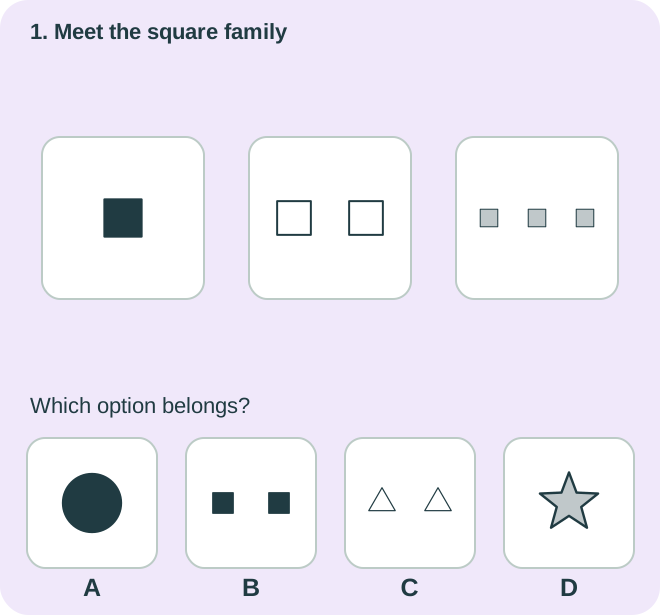
1. Meet the square family
Which feature belongs to all three example boxes?
See the answer and the shared rule
B: two solid squares. All three examples contain squares. Their sizes, fills and counts vary, so those are not the shared rule. Choose the option with squares, even though it looks different in other ways.
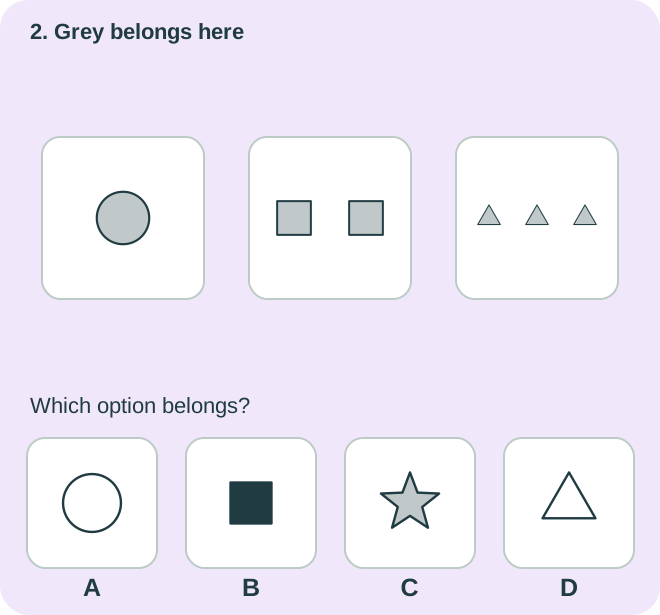
2. Grey belongs here
The shapes are different. Look for another feature they share.
See the answer and the shared rule
C: the grey star. Every example is grey inside. The matching option is the grey star. A circle matches one example’s shape but does not belong unless it also has the shared grey fill.
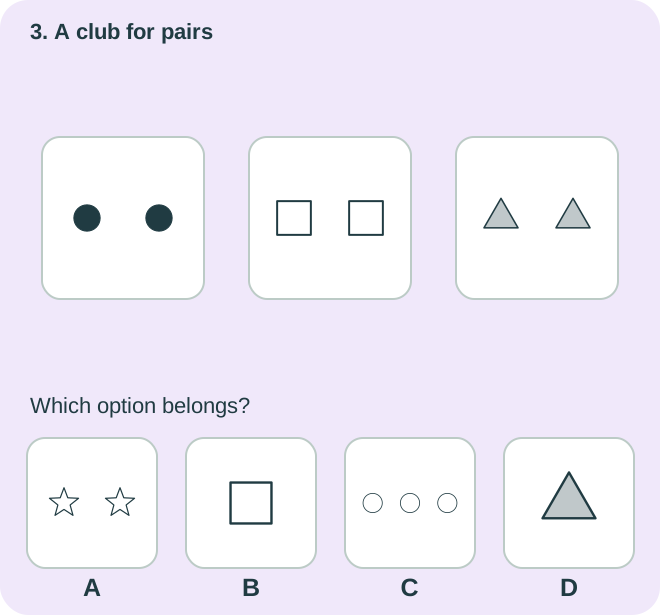
3. A club for pairs
Count inside each box. Do not add the three boxes together.
See the answer and the shared rule
A: two outline stars. Each example box contains exactly two shapes. Pick two stars. One square and three circles do not satisfy the count rule, even though their shapes appear in the examples.
4. Your turn: small but different
Compare size within equal-sized boxes. Look past shape and fill.
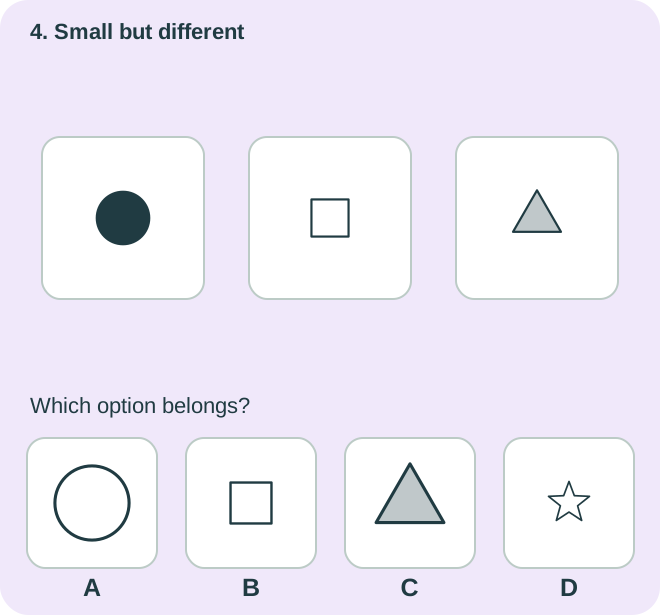
Check your reasoning
D: the small outline star. Every example uses small shapes. Choose the small star. Ignore the different shapes and fills: those vary within the family. The equal-sized boxes make size comparisons possible.
5. Your turn: two rules for one club
Find an answer that satisfies both count and fill.
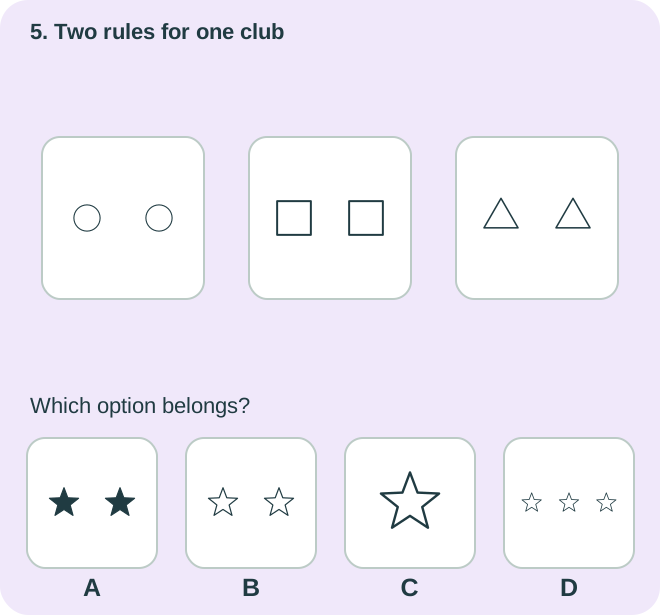
Check your reasoning
B: two outline stars. Every example has two outline shapes. The two outline stars satisfy both conditions. Two solid stars get the count right but the fill wrong; one outline star gets the fill right but the count wrong.
6. Your turn: three circles, please
Decide which features are essential, and which are allowed to vary.
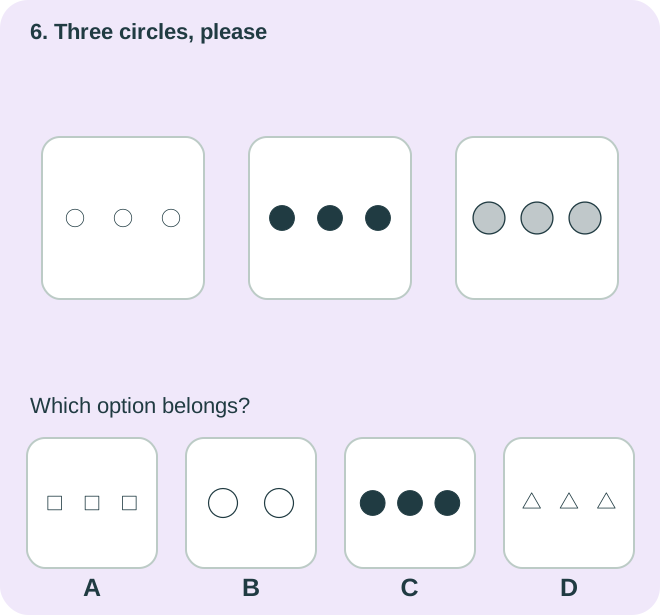
Check your reasoning
C: three large solid circles. Each example contains three circles. Size and fill change across the examples. Three large solid circles belong; three squares have the wrong shape, and two circles have the wrong count.
Help without giving away the answer
If your child picks an option that looks like one example, point to the other two and ask, “Does your rule fit these too?” If several options remain, ask what else the examples share. Have the child name the feature that rules out each near match.
For a hands-on version, draw three cards that share a feature and make a fourth that belongs. Then swap roles: let your child create a shape club for you. Keep the membership rule simple enough to explain, and include an outsider so you can discuss why it does not fit.
Different rules can sometimes describe a small collection of pictures. Listen to the explanation and test it against every example and answer choice. These activities are an opportunity to discuss reasoning; six answers cannot establish a child’s ability or test percentile.
Put the rule to work in a fresh session
Open six-question Figure Classification practice. Review the grade or known level. Coaching provides explanations and retries, while the score records first answers. You can also select 12 questions before starting.
To practice applying a change, explore the Figure Matrices lesson. To imagine reflections and unfolding, try the illustrated paper-folding guide.