Find the change in the top row. Make that same change in the bottom row. That is the starting move for these two-by-two figure matrices. You are looking for a relationship, so the answer may be a different shape from the picture above it.
Start with the first three puzzles together, then let your child explain the last three. A finger tracing left to right can help keep the two rows separate.
Get the free four-page figure matrices pack — six picture puzzles, space to explain a rule, and a visual answer key. No signup required.
Already know the strategy? Choose a focused Figure Matrices practice session. Check the grade and level, then press Start. The tool generates a fresh set; these lesson answers will not answer those questions.
What are figure matrices?
A matrix is a grid of pictures with a missing piece. Riverside’s CogAT test descriptions describe using relationships between figures to find the missing picture. The format varies with level; our lesson uses small two-by-two grids to make the reasoning easy to discuss.
These are original GrowMindGrow teaching exercises, not official CogAT items. They do not reproduce a particular test level or predict a standardized score. For school testing questions, start with our CogAT parent guide.
The pattern detective’s three moves
- Compare the top pair. Check shape, fill, size and number. Say exactly what changed.
- Keep the rule, change the starting picture. Apply the top-row change to the picture at bottom left. Predict the missing picture before studying the choices.
- Check every part of the answer. A choice may follow one clue while breaking another. Features that did not change in the top pair should stay put in the bottom pair too.
In these diagrams, each rounded box is one cell. Several little shapes inside a box belong to that one cell. Pick A, B, C or D; the letter is just an answer label.
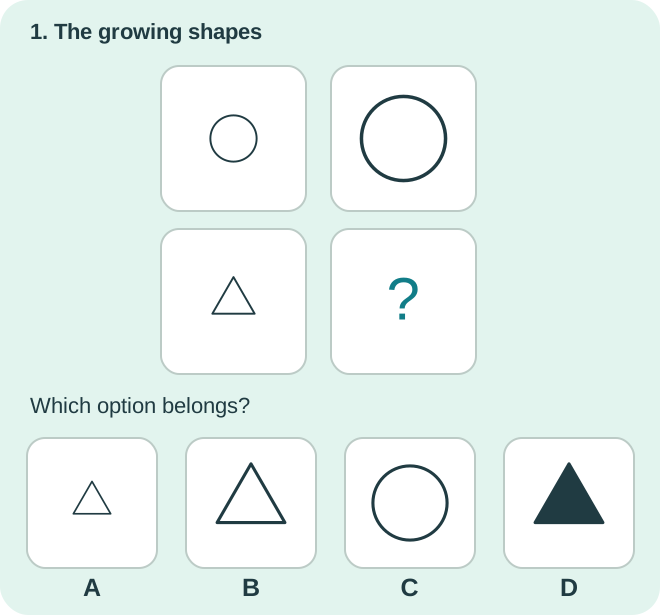
1. The growing shapes
Compare left to right. What changes, and what stays the same?
See the answer and the rule
B: the large outline triangle. The small circle becomes a large circle. Keep the triangle outline and increase its size too. Choosing a large circle copies the top answer instead of applying its rule.
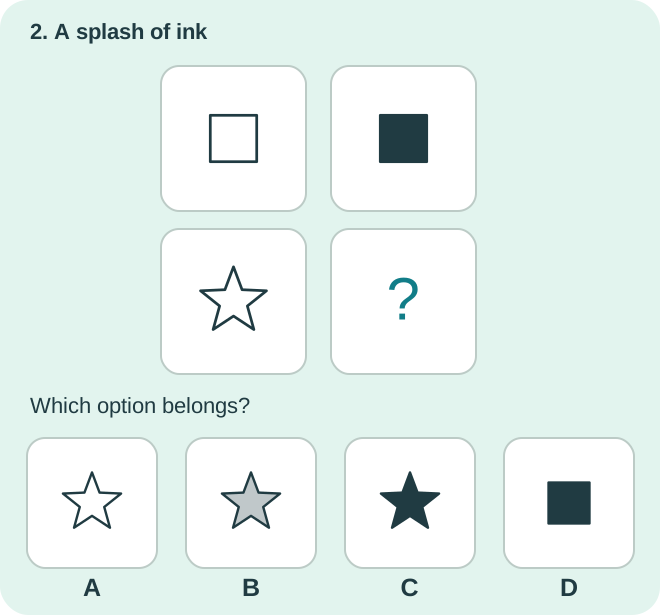
2. A splash of ink
Look inside the shapes. Does the outside edge change?
See the answer and the rule
C: the solid star. The outline square becomes solid. Fill the star solid while keeping its size and shape. Grey is a different fill; an outline star has not changed.
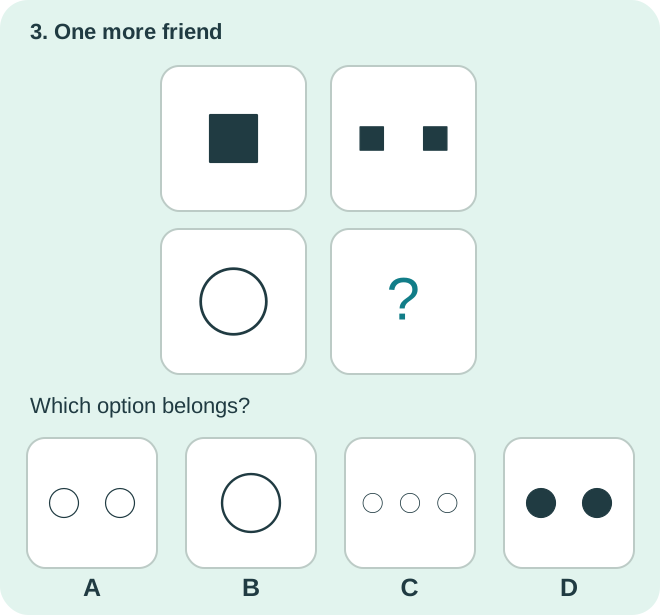
3. One more friend
Count the shapes in each top box before looking at the bottom row.
See the answer and the rule
A: two outline circles. One solid square becomes two solid squares. The bottom row must likewise turn one outline circle into two outline circles. Three circles add too many, and solid circles change an extra feature.
4. Your turn: two clues at once
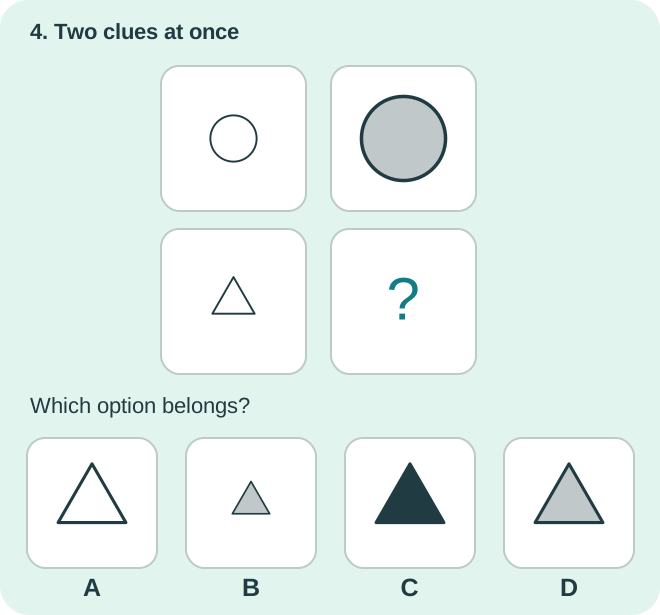
Try this one yourself: check both size and fill.
Check your reasoning
D: the large grey triangle. The top circle changes from small and empty to large and grey. The triangle must make both changes. A large empty triangle follows only the size clue; a small grey triangle follows only the fill clue.
5. Your turn: a different shape family
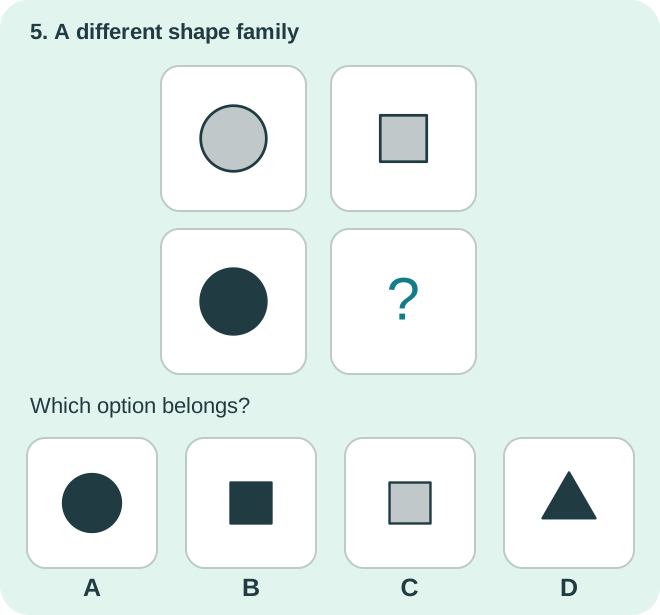
Keep the fill while changing the shape.
Check your reasoning
B: the solid square. A grey circle becomes a grey square. Apply that same change to the solid circle: it becomes a solid square. The bottom fill stays solid; it does not copy the grey fill from the top row.
6. Your turn: the shrinking pair
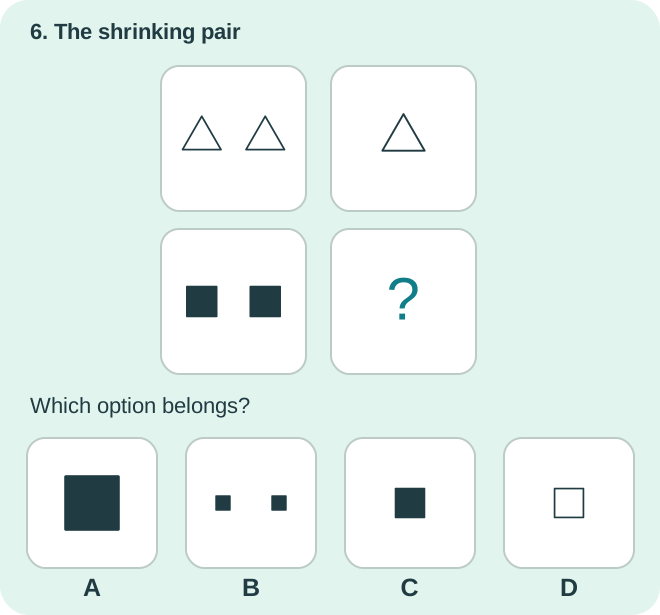
Count first, then compare size. Which choice follows both changes?
Check your reasoning
C: one small solid square. Two large outline triangles become one small outline triangle. The two large solid squares must become one small solid square. Keep the square shape and solid fill while changing both count and size.
When a child gets stuck
Cover the answer choices and return to the top pair. Ask, “What changed?” followed by “What stayed the same?” If the child names only a shape, invite a full instruction such as “make it bigger and keep it empty.” Then point to the bottom-left picture and ask them to follow that instruction.
A different explanation is worth hearing. A single picture pair can suggest more than one imaginable pattern; these teaching questions use the simple feature changes described in the answers. Ask whether the proposed rule works consistently and selects one of the offered pictures. Avoid turning a short practice activity into a judgment about ability.
Try a fresh set or explore another skill
Open six-question Figure Matrices practice. Choose the child’s grade or known level before starting. Turn on coaching for explanations and retries; the results still show first-answer accuracy. Choose 12 questions if a longer session suits your child.
For a different reasoning move, try Figure Classification: find the shared rule. For spatial reasoning, explore paper folding with step-by-step diagrams.