Four steps, in the order children usually meet them. Start at the step that feels familiar, and move on when it feels easy. Grades are only a guide; the “Ready when” line matters more. These are practice choices, not a reading program or an assessment.
1
Hear sounds, meet letters
Notice the sounds inside spoken words, and the shapes of letters.
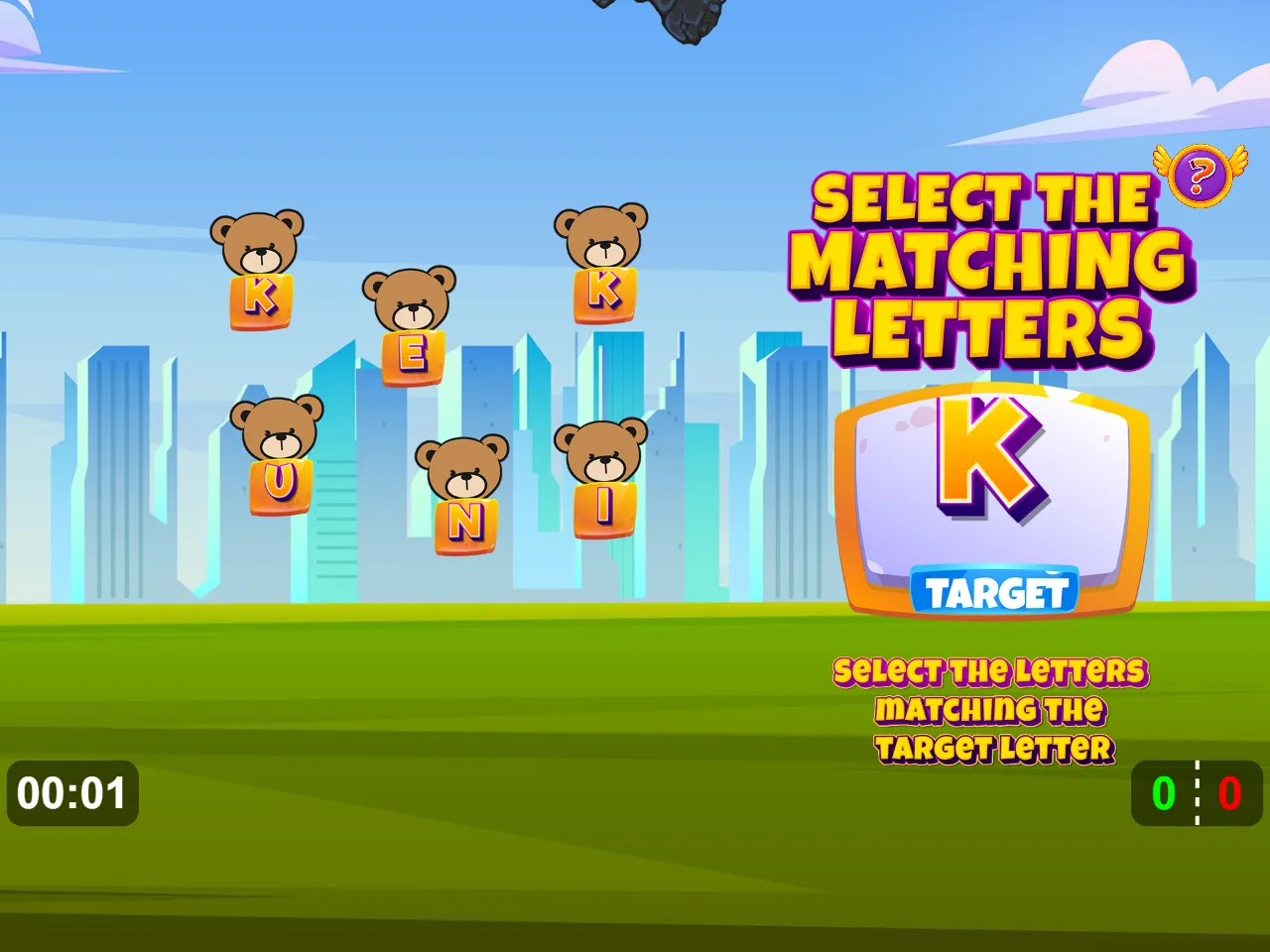
Free, no signup. A grown-up models the sounds: this activity has no recorded phoneme audio and does not listen to or score your child’s reading.
Common words · Two guided games
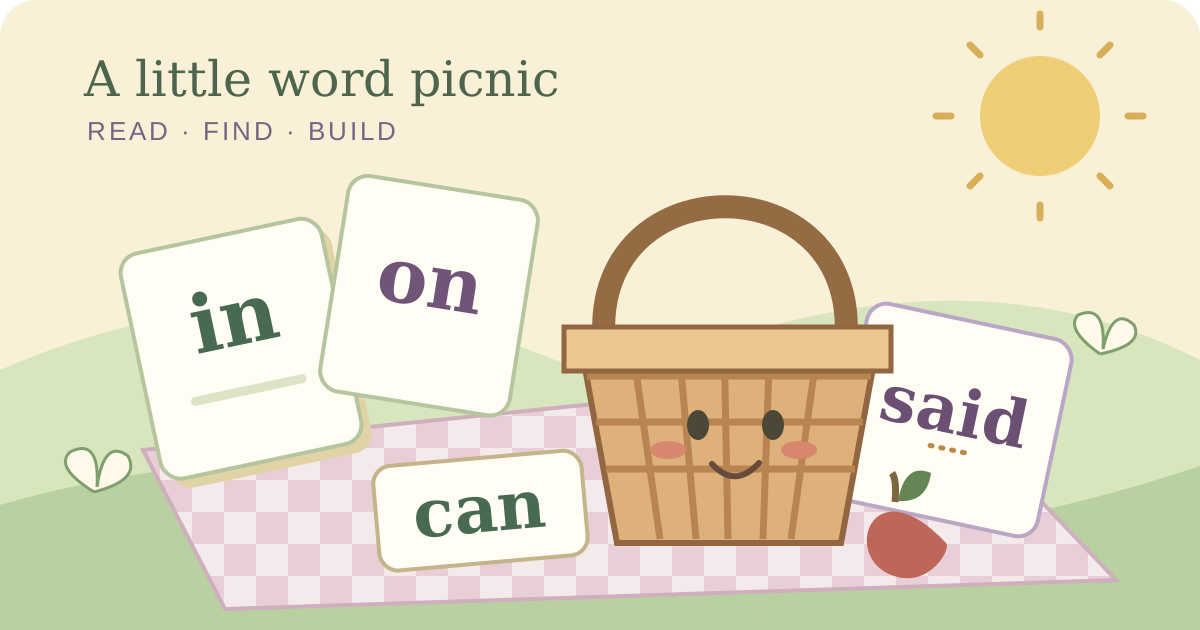
Pack a little word picnic
Read a familiar word together, find its card and build it from spelling pieces. Choose words to blend, words with a special part to notice, or a little of both.
A good starting point: your child has started learning these words and you can help with unfamiliar sounds.
Free, no signup. Twelve words and two pages of printable cards. A grown-up supplies the voice; there is no recorded audio or reading score.
Move, listen, imagine
Three games to lead together
These are spoken and read-together activities. The screen holds the directions; you supply the voices, turns and encouragement.
Listening game · No letters needed
Sound treasure hunt
Give a sound clue and search your room for something that starts with it.
Say “Let’s find something that starts with /m/,” using the sound at the beginning of moon, not the letter name.
Name a few nearby objects together. Stretch the first sound in mat or mug to hear the match.
Take turns giving a sound clue. If nothing nearby fits, imagine or draw an object.
Try a clue and check it together
“Does sock or cup start like sun?” Sock and sun begin with /s/. Say the words aloud; the child does not need to read them.
Make it easier: offer two familiar objects and model both names before choosing.
Rhyming game · Say it aloud
Rhyme picnic
Pack an imaginary picnic with pairs of words that rhyme. A moon and a spoon can come too!
Say moon and spoon. Listen to how they sound alike from the vowel to the end.
Offer a choice: “Can cat bring a hat or a cup?” Say all three words naturally.
Take turns making a pair. Silly imaginary picnic items are welcome.
Try three picnic pairs
Moon–spoon, cat–hat and bee–tree rhyme. Cat and cup start alike but do not rhyme. Listen to the spoken words instead of looking for matching letters.
Make it easier: choose between two words before asking your child to invent a rhyme. Use words that rhyme in your family’s pronunciation.
Read-together game · Notice the clues
Story detectives
Read the tiny story aloud together. Then take turns being the detective who finds a clue.
A grown-up can read every word. This is a conversation about meaning, not a test of independent decoding.
Our tiny story
The rainy picnic
Maya packed two apples and a blanket. At the door, she heard rain tapping on the steps. She carried the blanket to the living room. “Our picnic can stay dry in here,” she told her brother.
What did Maya pack?
Two apples and a blanket. Find those words in the first sentence.
Why did she move the picnic inside?
She wanted the picnic to stay dry. The rain at the door and her last sentence give us clues.
What might the children do next?
There is more than one possible answer. They might spread the blanket and eat the apples. Ask, “What in the story helped you imagine that?”
Your turn: change the weather or the picnic food and tell a new version together.
Keep a little play for later
Reading activities to print and share
These resources support practice and conversation. Choose the pages you need.
Start with familiar sounds or words, model what to do, and stop or simplify when the activity becomes frustrating. The Institute of Education Sciences’ family reading activities offer guidance on choosing an appropriate starting point and practicing together.
These games are practice choices, not a complete reading program or assessment. For a child’s next phonics patterns or suitable reading text, follow the sequence used by their teacher.
This website utilizes cookies and similar technologies for functionality and other purposes. Your use of this website constitutes your acceptance of cookies. To learn more about our cookies and the choices we offer, please see ourPrivacy Policy.