A number line turns an answer into a journey. Where do you start, which way do you go, and how far do you travel? A child who can answer those three questions can add and subtract numbers far larger than the ones they know by heart, and can show you how they did it.
Download the free number-line practice pack (PDF, 5 pages) — six worked examples, six problems on empty lines, and a complete answer key. No signup is needed.
The examples below build in order. Each one shows the whole journey, so a child can check a step without starting again.
Start where the first number already is
The most common wrong answer in the whole topic comes from starting at zero.
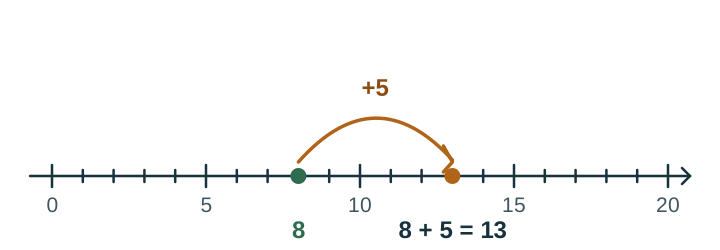
Put a finger on 8, not on 0. The 8 has already been counted — it is where you are, not something still to count. From there, five hops land on 13. A child who starts at zero and takes five hops lands on 5 and has answered a different question.
Say it as a journey: I am on 8. I jump 5. I land on 13.
Jump left to take away
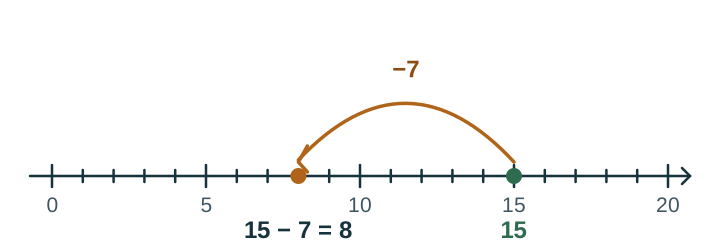
Subtraction goes the other way. Start at 15 and jump 7 to the left, and you land on 8. The picture explains something a written sum does not: the answer is smaller than where you began, because you travelled backwards.
If a child jumps right out of habit, do not correct the arithmetic — ask which way the story goes. Going back is the idea to fix, not the number.
Take the tens first
Once numbers grow past twenty, hopping one at a time stops being practical. Split the second number instead.
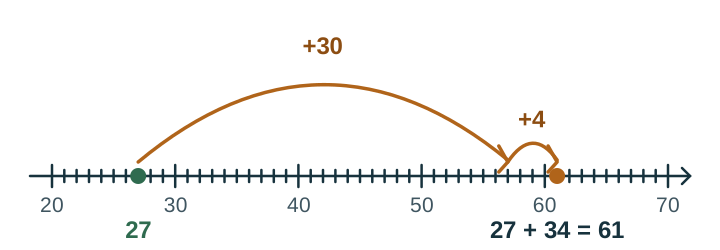
Thirty-four becomes 30 and 4. One jump of 30 from 27 lands on 57; four more lands on 61. Both jumps are easy to say out loud, and each one can be checked on its own.
This is the same reasoning as column addition, with the carrying visible. A child who can explain why 27 + 30 is 57 is doing place value, not counting.
Stop at the ten on the way
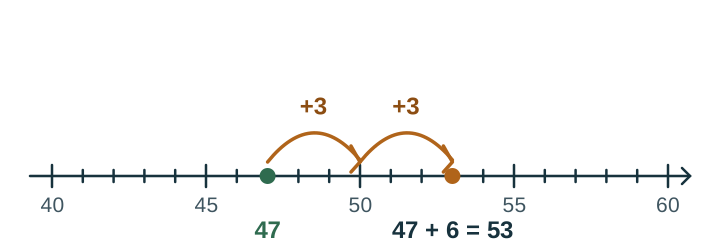
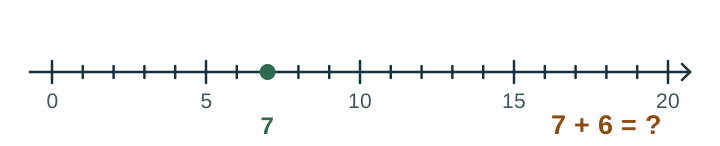
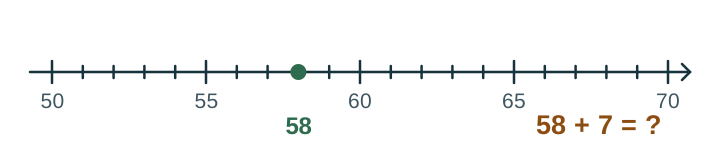
Adding 6 to 47 in one hop is awkward. Adding 3 to reach 50 is not, and 3 remains. Splitting a jump so that it stops on a ten is allowed, and it is what most adults do in their heads without noticing.
The useful question here is how far is it to the next ten? Asked often enough, it becomes automatic.
When the numbers are close, count up
Subtraction has a second meaning that the number line makes obvious: the distance between two numbers.
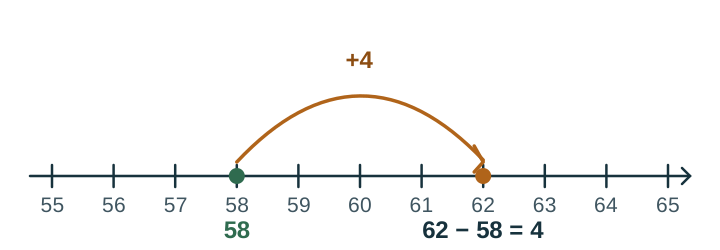
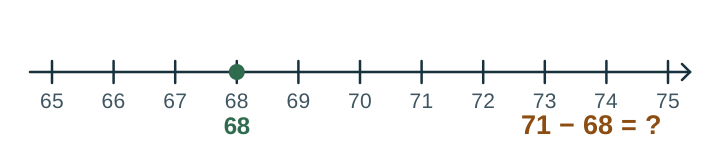
To work out 62 − 58, taking away 58 is hard work. Standing on 58 and walking to 62 is not. The answer is the distance travelled, not the place you stopped — which is why the 4 is written above the arrow and not under the landing point.
That distinction is worth being fussy about. A child who reads the landing point here will answer 62.
Count up in friendly steps
The same idea handles subtraction that would otherwise need borrowing.
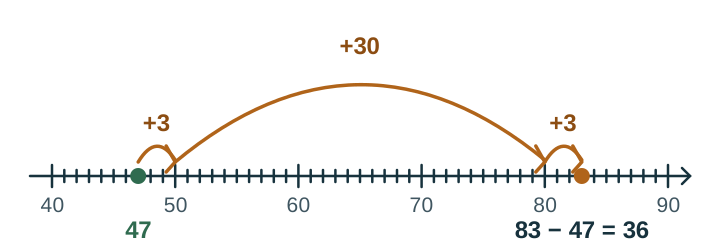
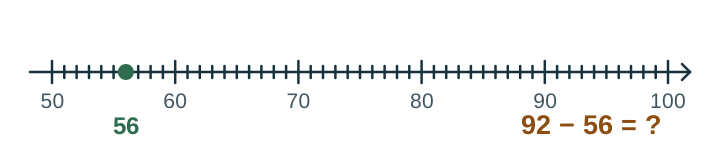
From 47: three to reach 50, thirty to reach 80, three more to reach 83. Add the jumps — 3 + 30 + 3 — and the answer is 36. Nothing was borrowed, and every single step is one a child can check by itself.
A different route is equally correct. From 47, jumping 33 to 80 and then 3 to 83 gives the same 36. Ask which route they took and why.
Four mistakes that cause most wrong answers
- Starting at zero instead of at the first number. The answer usually comes out equal to the jump. Fix it by pointing at where the finger should begin.
- Counting ticks instead of hops. Going from 8 to 13 is five hops but touches six ticks. If an answer is out by exactly one, this is almost always why.
- Jumping the wrong way for subtraction. Check the direction before the arithmetic.
- Reading the landing point when counting up. For 62 − 58 the answer is the 4 travelled, not the 62 arrived at. Ask: is the answer where you stopped, or how far you went?
A fifth is worth watching for in drawings: unequal jumps. If a hop of 3 looks the same length as a hop of 30, the picture has stopped being a measurement. It does not have to be perfect, but 30 should look much further than 3.
Six to try
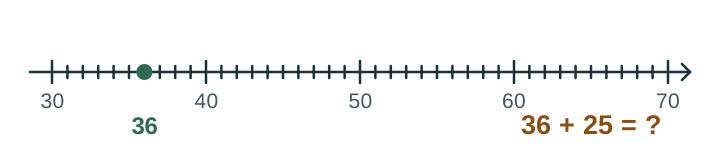
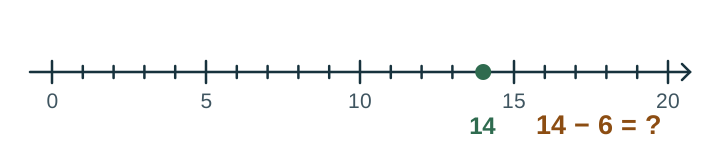
Draw the jumps on each line. Write how far you jumped above each arrow. The answers are below, and the printable pack has the same six problems with a full answer key.
Answers
- 7 + 6 = 13. Try stopping at 10 on the way.
- 36 + 25 = 61. Take the 20 first, then the 5.
- 14 − 6 = 8. Jump left. Stopping at 10 splits the 6 into 4 and 2.
- 71 − 68 = 3. The numbers are close. Count up and measure the gap.
- 58 + 7 = 65. How far is it to 60?
- 92 − 56 = 36. Count up from 56: to 60, then in tens, then the last little step.
These are one route each, not the only route. A child who lands on the same answer by different jumps has done it correctly — ask them to walk you along their line.
Where to go next
Keep the line available after the pictures stop being needed. Children who can add in their heads still use it to explain themselves, and an explanation is easier to check than an answer.
- Practise the jumps one step at a time in our number line games: adding and taking away within 10 or 20, with as many tries as a child needs.
- Try the same strategies on a story instead of a sum with the math word problem generator, which draws a number line for problems past twenty.
- Find a hands-on activity by grade in our math games for kids.
- For ten minutes at the kitchen table, see ten minutes of math at home.