


Teaching
Questions to Ask at a Parent-Teacher Conference
Interactive tool
Build a focused list of parent-teacher conference questions about learning, classroom life, wellbeing, and practical next steps.
 GrowMindGrow
The GrowMindGrow learning journal
Practical ideas, free printables, and playful ways to help children learn and grow.
Showing 25–35 of 35 resources
Teaching
Build a focused list of parent-teacher conference questions about learning, classroom life, wellbeing, and practical next steps.
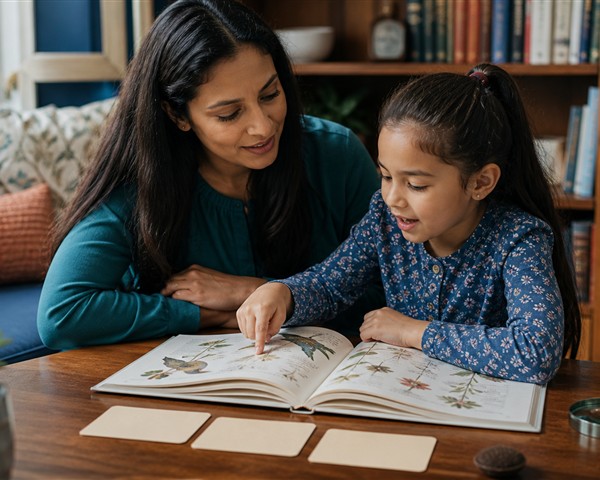
Reading & Writing
Choose grade-aware questions for before, during, and after reading, then use them to follow a child’s thinking without turning a book into a quiz.

Reading & Writing
Create thousands of child-friendly story ideas by grade and genre with a free, private generator that leaves the storytelling to the writer.

Teaching
Fifteen realistic ways families can support learning through connection, routines, reading, play, independence, healthy habits, and partnership with school.

Technology
How schools can choose remote-learning, classroom, and AI tools that solve real instructional problems without sacrificing access, privacy, or relationships.

Child Development
An age-aware overview of common development from 6 to 12, how families can help, and when a concern is worth discussing with a professional.

Child Development
Twelve age-flexible activities that help children build emotional vocabulary, notice body cues, listen, empathize, solve problems, and reflect.

Reading & Writing
Five practical ways to use children’s questions, interests, choices, play, and reflection to make reading and writing more meaningful.

Teaching
Ten practical ingredients for a safe, inclusive elementary classroom built on relationships, clear routines, student voice, active learning, and family partnership.

Reading & Writing
Browse 300 grade-by-grade writing prompts, download printable K–5 PDFs, and learn how to adapt each idea for emerging and confident writers.

Technology
A practical, age-aware approach to children’s screen use that looks beyond the clock to content, context, healthy routines, and family communication.


